
Solar lights are the easiest way to light up stairs, a deck, a terrace or a gate without an electrician. There are no wires and no electricity bill: a small solar panel charges a battery during the day, and a light sensor switches the lamp on at dusk. This guide explains what to look for so you buy the right type, in the right number, for the right spot.
1. Step lights or a wall lantern?
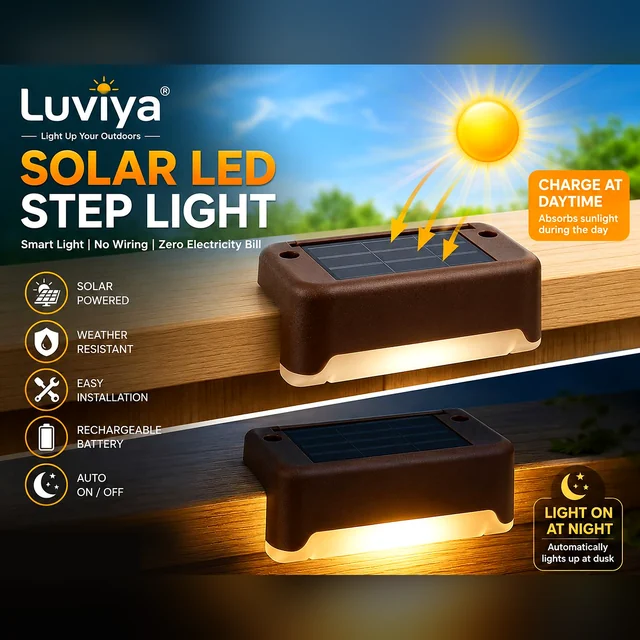
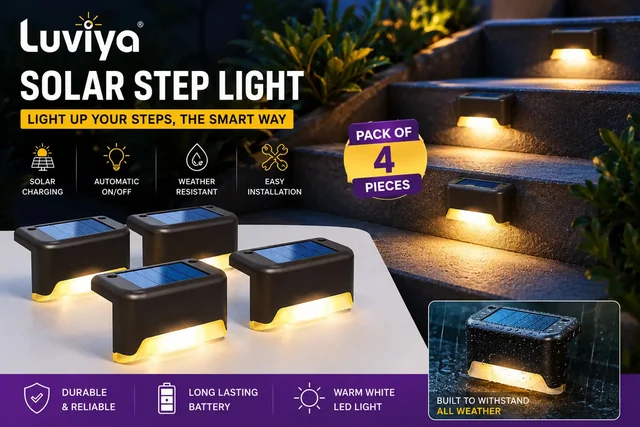
- Solar step lights are small, low lights that sit on each step, along a deck edge, a railing or a boundary wall. They give a soft glow that shows the way and makes edges safe to see at night. They come in packs, because you usually need several.
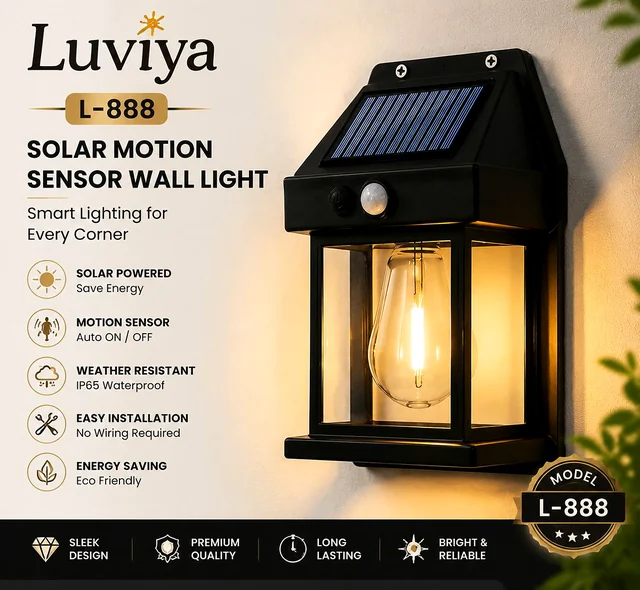
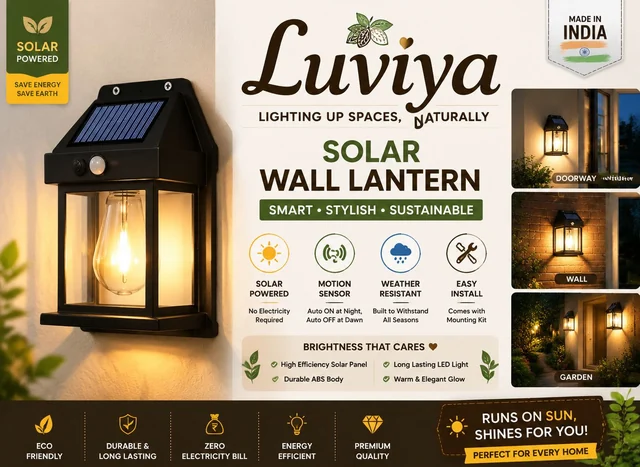
- A solar wall lantern is one brighter lamp for a gate, porch, entrance or garage wall. Models with a motion sensor stay dim or dark and light up brightly when someone walks by, which is useful for security and saves battery.
Many homes use both: step lights along the stairs or path, and a lantern at the gate or door.
2. Sunlight decides everything
A solar light can only give back the energy it collects. Put it where its panel gets direct sunlight for several hours, ideally 4 to 6. In India the sun is mostly to the south, so south-facing walls and open terraces charge best. Under a roof, a balcony above, a tree or in a narrow lane the light will charge poorly and switch off early.
Also keep the panel away from street lights and porch lights. The sensor “sees” that light, thinks it is still daytime and doesn’t switch on.
3. How many step lights do you need?
- Stairs: one light per step looks neat; one on every second step is enough to see the way.
- Paths, decks and boundary walls: one light roughly every 1 to 1.5 metres gives a continuous line of light.
- Railings: one on every post or every other post.
Our solar step light page has a calculator: enter how many steps or spots you want to light and it tells you how many packs to order.
4. Rain and dust: check the protection
Outdoor lights in India face monsoon rain, dust and strong sun. Look for a clearly stated weatherproof design or an IP rating. IP65, for example, means the lamp is dust-tight and protected against jets of water, which covers heavy rain. Fix lights where water doesn’t collect around them.
5. Light colour and modes
- Warm white or warm yellow light looks cosy on stairs, wooden decks and gardens. Cool white looks brighter but harsher.
- Modes on wall lanterns: motion only (lasts longest), dim plus motion (a soft glow all night that brightens when someone comes near) and always on (uses the most battery).
6. Installation in ten minutes
Most solar step lights and lanterns screw onto a wall, step or post with the screws and wall plugs in the box. Before the first night, pull out the battery tab if there is one, switch the lamp on and leave it in full sun for a whole day so the battery starts full.
7. Quick checklist
- Does the spot get direct sun for 4 to 6 hours?
- Step lights for edges and paths, a lantern for gates and doors?
- Enough lights for the length you want to cover?
- Weatherproof or IP-rated for monsoon?
- No street light shining on the panel at night?
Questions people ask
Do solar lights work during the monsoon?
Yes, but they charge less on cloudy days, so they run for a shorter time that night. A weatherproof or IP65 light handles the rain itself; place it where the panel still gets as much open sky as possible.
Can I use solar step lights indoors?
Not really. They need direct sunlight on the panel to charge. Indoors or under a roof they will barely charge.
Do solar lights need any wiring or an electrician?
No. They have their own panel and battery, and mount with screws. There is nothing to connect.
Why does my solar light not switch on at night?
Usually the battery tab is still in, the panel did not get enough sun, or another light (like a street lamp) is shining on the panel so the sensor thinks it is daytime.