
Diwali is about light at every doorstep, stair and balcony. Diyas and serial lights are part of it, but they need oil, wires, extension boards and someone to switch them on every evening. Solar lights take care of themselves: they charge in the day and switch on at dusk on their own, every night of the festival and long after it.
1. Where solar lights look best for Diwali
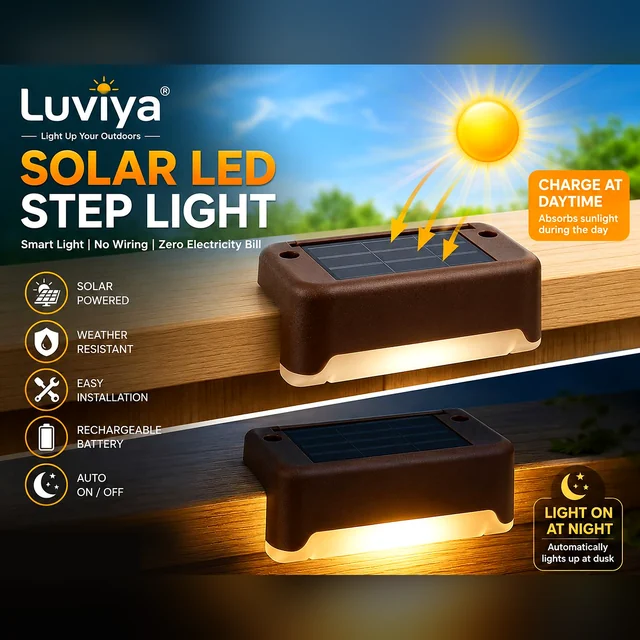
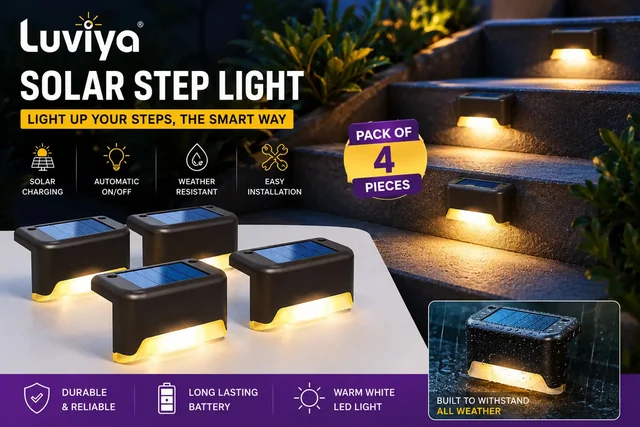
- Stairs and entrance steps: a solar step light on each step makes the way to your door glow warmly and keeps guests safe on the stairs.
- Balcony and terrace edges: a row of step lights along a parapet or railing outlines the house beautifully from the street.
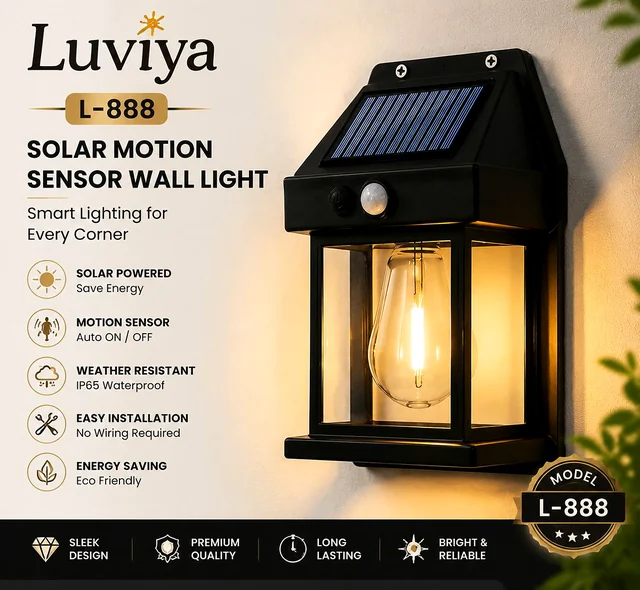
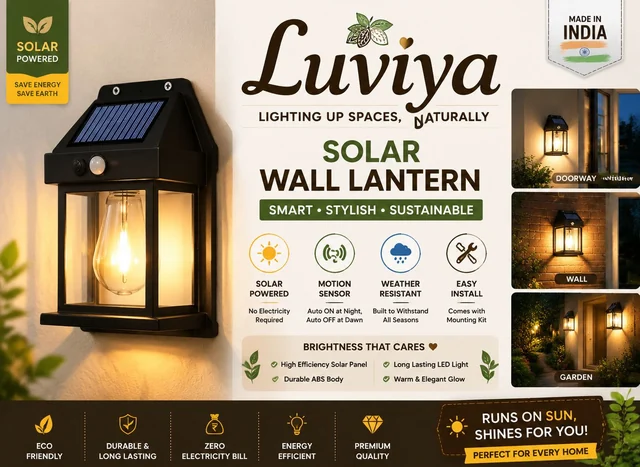
- Main gate and boundary wall: a solar wall lantern on each gate pillar gives a classic, welcoming look. In dim + motion mode it glows softly and turns bright when guests arrive.
- Garden paths and rangoli areas: step lights fixed along a low wall or path border light the area without cables lying on the ground.
2. How many lights do you need?
- Stairs: one light per step for a full festive look, or one on every second step.
- Balcony or terrace edge: about one light every metre for a continuous line.
- Gate: one lantern per pillar, or one above the door.
The calculator on the step light page tells you how many packs of 4 to order for the number of spots you want to light.
3. Plan for charging
Solar lights need direct sunlight on the panel, ideally 4 to 6 hours a day. Fix them where the panel sees open sky: on top of a parapet rather than under a balcony, on the sunny side of a gate pillar. Fix them a few days before the festival and leave them in full sun, so the batteries start full.
Keep the panels away from strong decorative lights. If serial lights or a porch light shine on a panel, its sensor thinks it is still daytime and the lamp waits to switch on.
4. Safer than open flames, easier than wires
- No flame, so nothing to watch near curtains, children or pets.
- No wires or extension boards across stairs and balconies.
- No switching on and off every evening: they turn on at dusk by themselves.
- No electricity bill, even if the lights stay up all season.
Many families still light diyas for the puja and use solar lights for stairs, gates and edges that need to glow all evening.
5. After Diwali, they keep working
Unlike festive serial lights that go back in a box, solar step lights and lanterns are made to stay outdoors all year. They keep your stairs, gate and terrace safely lit every night, through the rest of winter and the monsoon.
6. Order early
Delivery takes 3 to 7 days, and solar lights need a sunny day or two to charge fully. Ordering a week or more before Diwali gives you time to fix them and let them charge. Buying for a big house, an office or a housing society? Message us on WhatsApp for a bulk order.
Questions people ask
Are solar lights bright enough for Diwali decoration?
Solar step lights give a soft warm glow, ideal for outlining stairs, balconies and paths. For a brighter look at the gate, a solar wall lantern with a motion sensor turns bright when someone comes near.
Will solar lights work if I fix them on Diwali day?
They need a sunny day to charge. Fix them a few days before and leave them in full sun, so the batteries are full for the festival nights.
Can I use solar lights with diyas and serial lights?
Yes. Just keep strong lights from shining directly on the solar panels, or the sensor may think it is still daytime and the solar light will wait to switch on.
Can I keep solar lights outside after Diwali?
Yes. They are made for outdoor use all year, including the monsoon, and switch on every night by themselves.