
Gates, stairs, balconies and terraces all need light at night. You can wire in an electric light or fix a solar one. Both have a place. Here is a plain comparison to help you choose.
1. Cost of fitting
- Electric: you pay for the fitting plus an electrician, cable, a switch, and often chiselling and plastering the wall to hide the wire. On a gate pillar or boundary wall far from a switchboard, the wiring can cost more than the light.
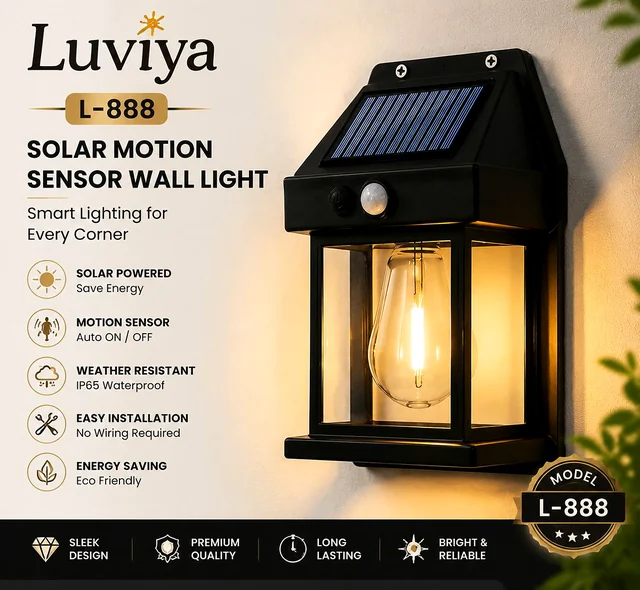
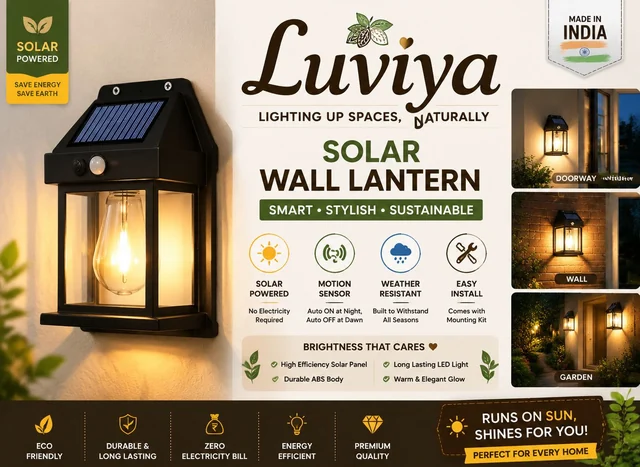
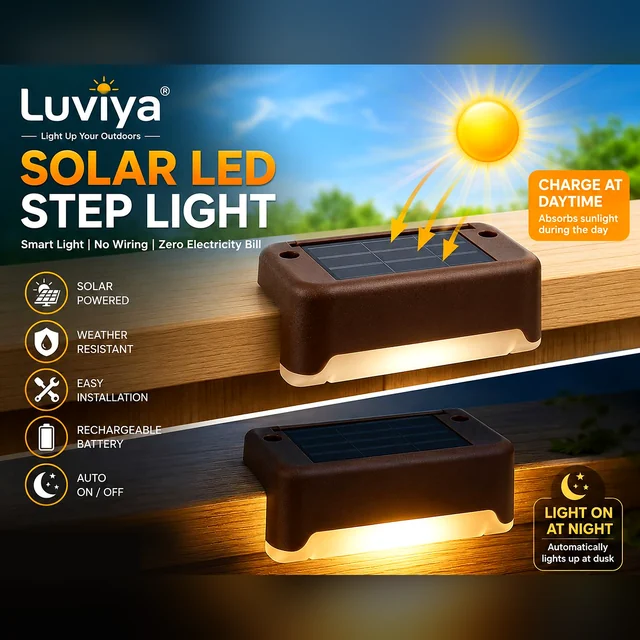
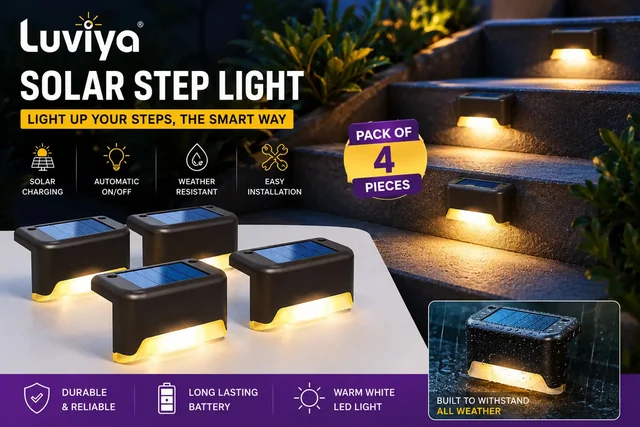
- Solar: no wiring at all. A solar wall lantern mounts with two screws, and solar step lights screw onto steps or railings in minutes.
2. Running cost
An electric outdoor light that stays on all night adds a small amount to every bill, month after month. For example, a 9 W LED bulb on for 12 hours a night uses about 3 units a month, roughly 40 units a year. Multiply that by every light around the house. A solar light runs on sunlight, so it costs nothing to run.
3. Brightness
This is where electric lights win. A wired floodlight can light up a whole driveway or parking area. Solar lights are best for marking and gentle lighting: steps, edges, gates, doorways and paths. A motion-sensor solar lantern is a good middle ground: soft or dark most of the night, bright when someone comes near.
4. Power cuts
Wired lights go dark in a power cut, often exactly when you need them. Solar lights run on their own battery, so stairs and gates stay lit during an outage.
5. Rain and safety
Outdoor wiring and switchboards need proper waterproofing, or water can cause short circuits. Solar lights are sealed, low-voltage units with no mains power outdoors. Look for a waterproof rating such as IP65 for exposed spots.
6. Maintenance
- Electric: replace bulbs, and fix wiring or switches if they fail.
- Solar: wipe the panel every few weeks. The rechargeable battery may need replacing after a couple of years.
7. Placement
Electric lights can go anywhere you can run a wire. Solar lights need their panel in direct sun for about 4 to 6 hours a day, so they suit open gates, terraces, stairs and boundary walls better than deep, covered verandas.
Which should you choose?
- Choose solar for: gates and pillars, stairs and steps, balcony and terrace edges, garden walls and paths, rented homes where you can't run wires, and anywhere you want light during power cuts.
- Choose electric for: very bright floodlighting of large areas, covered spots that get no sun, and lights you want to switch on and off at a fixed time every day.
Many homes use both: a wired light for the main porch, and solar lights for the gate, stairs and terrace edges where wiring would be costly or messy.
Questions people ask
Are solar outdoor lights as bright as electric lights?
Usually not. Solar lights are best for steps, edges, gates and paths. For lighting a large driveway brightly, a wired floodlight is better. A motion-sensor solar lantern turns bright when someone comes near.
Do solar lights save electricity?
Yes. They run only on sunlight, so they add nothing to your electricity bill, and there is no wiring cost to install them.
Do solar lights work during power cuts?
Yes. They run on their own built-in battery, so they keep working when the mains power goes off.
Where should I not use solar lights?
Avoid spots with no direct sun, such as deep covered verandas or under a slab. The panel needs about 4 to 6 hours of direct sunlight a day.